
A good-looking page is not enough if the user journey breaks down before conversion. Sales funnel pages are designed to move visitors through a structured sequence, helping them understand the offer, build trust, overcome hesitation, and take the next step.
At Click Creek, we design sales funnel pages that support the full conversion path rather than treating each page like an isolated asset. The goal is to create a connected experience where every step has a purpose, every page supports the next action, and the overall funnel works as a system.
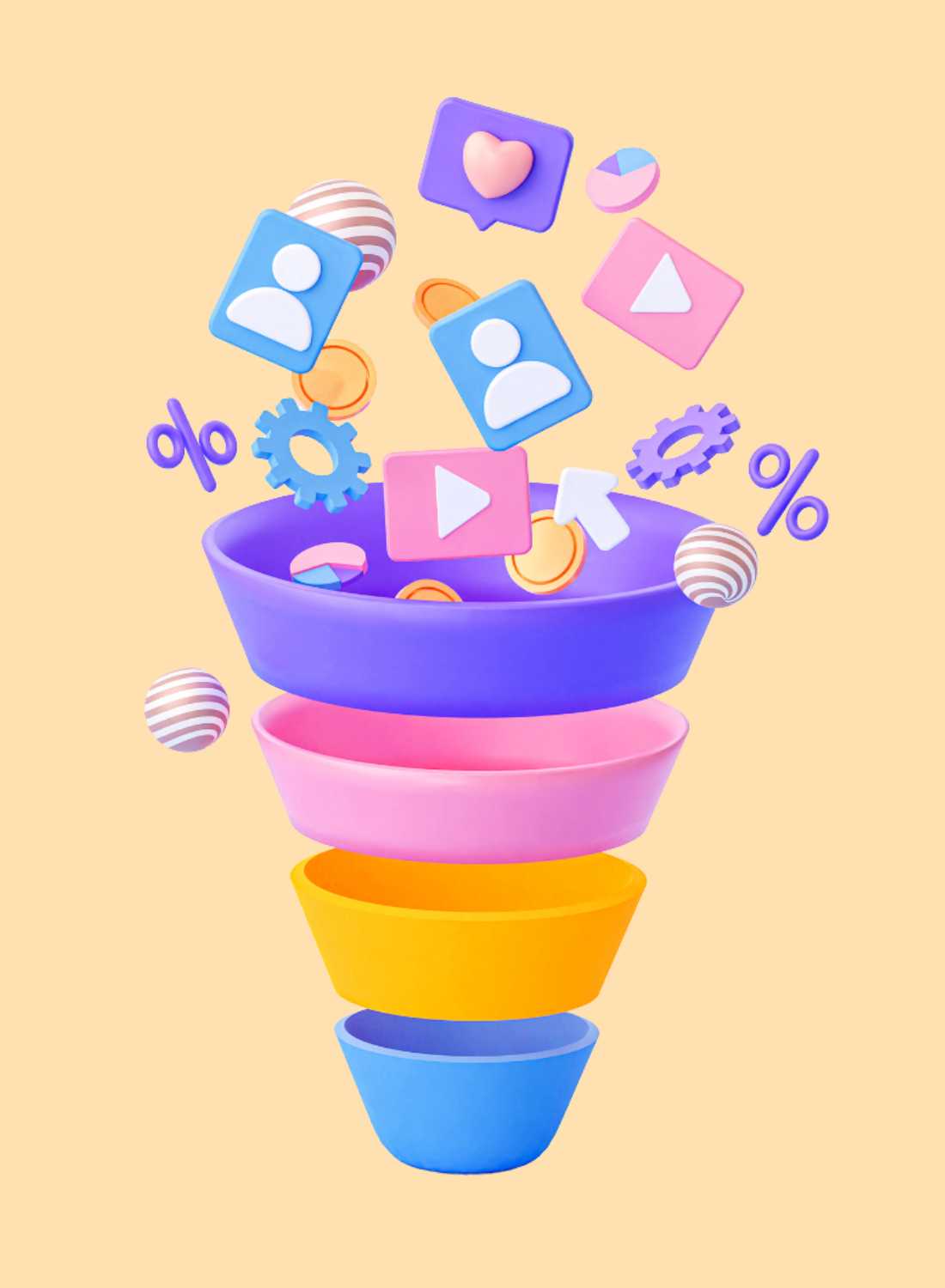
Not every visitor is ready to act the moment they land on a page. Some need more context. Some need proof. Some need reassurance. Some need a better explanation of what happens next.
That is where sales funnel pages become valuable. Instead of expecting one page to do everything at once, the funnel breaks the conversion journey into logical steps. This makes it easier to match user intent, reduce friction, and improve the chances of moving people from interest to enquiry, booking, sign-up, or sale.
Whether you’re launching a new business, redesigning your website, or looking to generate more leads, our team is here to help. Share your requirements and we’ll provide tailored solutions that align with your business goals.
Sales funnel pages are designed to support progression. Each page has a job, and that job should connect clearly to the next stage in the journey.
The first page in the funnel needs to create relevance quickly. It should match the traffic source, clarify the offer, and show the visitor they are in the right place.
As users move deeper into the funnel, the page sequence should explain the problem, frame the solution, and present the offer in a way that feels clear rather than overwhelming.
Trust elements such as testimonials, proof, process explanation, guarantees, credibility signals, and objection handling become increasingly important as users move toward action.
A strong funnel removes unnecessary distractions, simplifies choices, and makes the next step feel obvious and low resistance.
Instead of relying on one generic page, the funnel creates momentum. Each page helps move the visitor closer to the intended outcome.
Sales funnel pages are ideal for businesses that want more than a standalone web page. This service is suited to campaigns, offers, lead generation systems, consultative sales journeys, and service-based conversion flows where users need a sequence rather than a single screen.
This can be a strong fit for businesses that:
Many funnels underperform because the pages are disconnected, the messaging is inconsistent, or the user is being asked to convert too early.
This service helps when:
We begin by understanding the goal of the funnel, the audience, the traffic source, and the conversion action. From there, we define what each page in the sequence needs to do and how users should move through it.
Instead of designing pages in isolation, we map the journey. This helps define page roles such as entry page, offer page, lead capture page, booking page, confirmation page, or support page.
Each page needs to continue the conversation rather than restart it. We help shape the order of information so that the message builds naturally from page to page.
We create page layouts that support action, clarity, and progression. This includes visual hierarchy, CTA placement, supporting content blocks, trust elements, and mobile usability.
Calls to action should reflect the stage of the funnel. Early pages may ask for a click to learn more, while later pages may invite a form completion, booking, or purchase. The CTA strategy should match user readiness.
Sales funnels often need more than promotional copy. We include the types of sections that help reduce hesitation, such as outcomes, testimonials, process explanation, FAQs, and reassurance content.
Forms, booking prompts, and action buttons are placed where they support the decision process rather than interrupt it. This helps create a smoother path to conversion.
If the funnel includes pages intended for organic visibility, the structure can also support search intent through semantic headings, relevant content depth, and internal linking alignment.
Different funnels need different page combinations. The right setup depends on the offer, audience, and conversion path.
Designed to capture enquiries, quote requests, consultation bookings, or contact details through a step-based journey that builds interest before the ask.
Useful for businesses selling higher-value or more considered services where users need explanation, trust, and process clarity before converting.
Built for advertising campaigns, email promotions, or launches where the traffic source needs a dedicated, structured path rather than a broad website destination.
Designed to move users from initial interest to booked call, strategy session, consultation, or appointment with less drop-off along the way.
Ideal for specific packages, promotions, niche service offers, or time-sensitive campaigns that benefit from a guided decision journey.
A funnel works best when every page has a defined purpose and the overall sequence feels intentional.
1
We start with the action that matters most. Whether that is a lead, a booking, a sale, or a sign-up, the funnel needs to be built backward from that outcome.
2
We identify what the user needs to see, understand, and feel before they are ready to move forward. This shapes the sequence and content structure.
3
Each page is designed in relation to the page before it and the page after it. That helps create continuity and better progression.
4
We look at where users are likely to hesitate, get distracted, or leave. Then we design around those points with clearer structure, stronger trust signals, and better CTA flow.
5
A funnel should not push too hard too early, or wait too long to ask. Good funnel design introduces the next step when the visitor is ready for it.
Not every funnel uses the same steps, but most effective sales funnel systems include a version of the following page roles.
This is where users first arrive. It should create strong relevance, communicate the core value quickly, and direct them to the next meaningful step.
This page expands on the service, offer, or outcome. It gives the user more context and helps build understanding before conversion.
Some funnels need additional trust-building content, such as case studies, social proof, authority signals, or FAQs, to reduce hesitation.
This is where the user takes the primary conversion step. The structure should feel clear, easy, and supported by confidence-building cues.
This page confirms the action, sets expectations, and can guide the user toward the next step in the broader customer journey.
Some offers can convert with a single well-built landing page. Others need more room. If the service is higher value, more specialised, or more trust-dependent, users often need a stronger journey before they act.
That is why funnel pages matter. They give you a way to break down the decision process into manageable steps. Instead of overcrowding one page with everything, the funnel distributes the message in a more strategic and persuasive way.
Well-structured sales funnel pages can improve more than just visual presentation. They create a better path for both the business and the user.
Typical outcomes may include:
For service businesses, sales funnels are especially useful when the buying process is not instant. If users need to understand the service, compare options, trust the provider, and feel confident before making contact, a funnel gives you a better structure for that decision path.
Rather than asking every visitor to convert from a generic page, the funnel guides them more deliberately. This is useful for agencies, consultants, trades, specialists, ecommerce support providers, and businesses with higher-value offers or consultative sales processes.
We do not treat funnel pages as disconnected templates. We approach them as part of a wider conversion system. That means structure, hierarchy, messaging, trust, design, and page-to-page flow all need to work together.
The aim is to build funnel pages that are not only visually clear, but strategically connected. Every page should support the next decision and every section should earn its place in the journey.
If users are reaching your pages but not taking the next step, the problem may not be traffic alone. It may be the journey. A stronger funnel gives your business a clearer way to guide visitors from interest to action.
Click Creek designs sales funnel pages that support real conversion flow, stronger trust, and more intentional user progression across the pages that matter.
Discover how we turn ideas into purposeful digital experiences through website design, development, branding and SEO solutions tailored to each client’s goals.


Custom Web
A holistic wellness website promoting kinesiology services, healing, balance, and personal wellbeing.
Custom Web
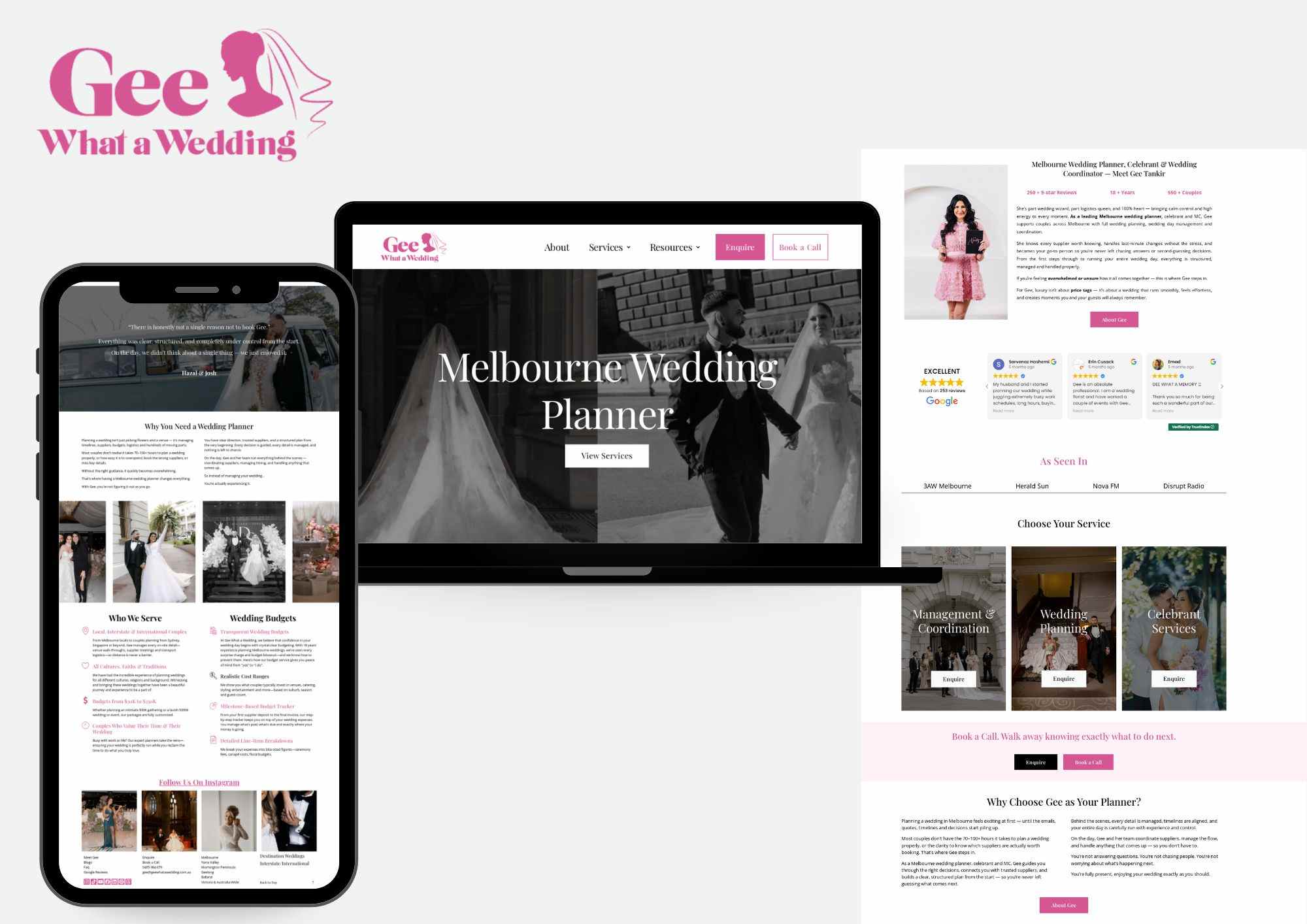
Wedding website showcasing memorable celebrations, planning services, venues, and Melbourne wedding experiences.

Custom Web
Telehealth website providing accessible healthcare services, professional consultations, and convenient support.
Our best advocates are the businesses we support. We collect short, specific testimonials that speak to our process, communication and results.


Sales funnel pages are a sequence of pages designed to move a visitor through a conversion journey. Instead of relying on one page to do everything, the funnel uses multiple steps to guide the user toward an action.
A landing page is usually a single focused page built around one action. Sales funnel pages involve multiple connected pages, where each page supports a different stage of the user journey.
If your service or offer needs explanation, trust-building, or a more structured decision path, a funnel can be more effective than a single generic page.
Yes. Funnel pages are commonly used to improve lead generation by creating a clearer progression from first click to form completion or booking.
Yes. Funnel pages work well for service promotions, high-value offers, consultations, quote requests, and campaign-specific traffic where the user journey needs more guidance.
Some funnel pages are built mainly for paid or direct campaign traffic, while others can also support search visibility if they are structured with the right headings, content depth, and semantic intent.
Offer a short form and a low-friction path.