




Your website should look better, work better, and convert better without sacrificing the search visibility you’ve already built. An SEO-safe website redesign protects your rankings, preserves valuable content and page equity, and improves the structure, speed, and usability of your site at the same time.
At Click Creek, we approach redesigns with both design and search performance in mind. That means we don’t treat SEO as something to bolt on after launch. We plan for it before the first layout change, during the build, and throughout migration so your new website is stronger without putting existing traffic at risk.
Many redesign projects fail for one simple reason: the visual update takes priority, while the SEO foundation gets ignored. Important URLs disappear, metadata gets overwritten, internal links break, content gets cut, redirects are missed, and rankings drop after launch.
A safe redesign avoids those problems. It keeps the parts of your site that search engines already trust, improves the parts that are underperforming, and creates a cleaner foundation for future growth.
This service is ideal for businesses that want to modernise an outdated website, improve conversions, refresh their brand presentation, or move to a better CMS without damaging existing organic visibility.
Whether you’re launching a new business, redesigning your website, or looking to generate more leads, our team is here to help. Share your requirements and we’ll provide tailored solutions that align with your business goals.
An SEO-safe website redesign is not just a new layout. It is a structured rebuild that protects the search signals already attached to your site while improving user experience and site performance.
We review your current site structure, important landing pages, ranking URLs, metadata, headings, internal links, and content assets before design or development decisions are finalised.
If URLs need to change, we map them carefully and apply redirects deliberately. This helps preserve page authority, avoid dead ends, and reduce the chance of traffic loss after launch.
We identify the pages and content sections that should be retained, improved, merged, or expanded rather than removed without strategy. This protects topical relevance and search intent alignment.
We carry technical SEO considerations through the redesign process, including crawlability, indexation controls, page hierarchy, heading structure, canonicals, image handling, internal linking, and site performance.
A redesign should improve clarity, trust, navigation, and conversions, but not by stripping away useful content or flattening the site architecture in a way that weakens search visibility.
If you are considering a redesign, these are usually the warning signs that a standard design-first process is not enough:
This service is a strong fit for businesses that already receive organic traffic and want to protect it while upgrading the site. It is especially useful for service businesses, local businesses, content-driven websites, WordPress sites, and WooCommerce stores where rankings, category pages, service pages, and existing indexed content matter.
If your website has built visibility over time, a redesign should be treated as both a design project and an SEO transition project.
We start by understanding how your current website performs and where its existing search value lives. This includes reviewing site structure, core landing pages, existing rankings, page purpose, content quality, internal linking patterns, and technical SEO considerations that need to be protected during the rebuild.
The new website structure is planned around real user journeys and page intent. We shape navigation, page hierarchy, service architecture, and content sections so the redesign supports both usability and discoverability.
Not every page should be kept exactly as it is, but valuable content should not be deleted blindly. We identify which pages should remain, which should be improved, which can be merged, and where new content is needed to strengthen topical coverage.
We design page layouts that support strong headings, clear information hierarchy, scannable content, conversion pathways, and internal linking opportunities. This helps the new design perform visually without weakening keyword targeting or content depth.
If the redesign requires structural changes, we build a redirect plan to preserve relevance and minimise disruption. Old URLs are mapped to the most appropriate new destinations to protect users, rankings, and backlinks.
We use the redesign as an opportunity to improve how your pages connect. Better internal linking helps search engines understand your content relationships and helps users move naturally between services, related solutions, and conversion points.
Before launch, key checks are carried out to reduce avoidable SEO problems. This includes crawl access, noindex handling, redirect testing, broken link checks, canonical review, mobile responsiveness, and general launch-readiness from an SEO perspective.
A redesign does not end at launch. We monitor performance after go-live so that issues can be identified early and corrected before they create longer-term visibility problems.
A successful redesign depends on process, not guesswork. We follow a staged approach that reduces risk while improving site quality.
1
Before changing anything, we identify the pages, topics, and assets that already support your visibility and lead generation. These should inform the redesign, not disappear because of it.
2
We plan the new website architecture so important services, landing pages, and supporting content are organised clearly. This helps both users and search engines understand the site more easily.
3
We keep what deserves to stay, improve what is underperforming, and remove or merge only where there is a clear reason. This protects topical relevance while lifting content quality.
4
When pages move, URLs change, or templates are rebuilt, we manage the transition carefully. Redirects, internal links, metadata, headings, and technical settings are all part of the handover.
5
We check the redesigned site before and after launch to catch indexing, crawl, speed, or structural issues early. This is where many redesign projects either succeed or fail.
A redesign can reduce visibility when search value is accidentally stripped out during the process. Some of the most common causes include removing high-performing pages, changing URLs without redirects, rewriting content without preserving intent, flattening site structure, replacing useful text with design-heavy layouts, and launching without technical SEO review.
The problem is rarely the redesign itself. The problem is redesigning without a search-aware framework. That is why SEO safety needs to be built into planning, structure, content, development, and launch.
A well-managed redesign should give you more than a nicer interface. It should produce a stronger digital asset that supports marketing, lead generation, and search growth. Expected outcomes often include:
We commonly work on websites built with WordPress and WooCommerce, especially when businesses need a redesign that balances flexibility, content structure, performance, and search visibility.
Whether you are refreshing a service-based website or rebuilding an ecommerce experience, the same principle applies: protect what already carries value, improve what is limiting growth, and launch with a clean technical and content foundation.
We do not separate design from search performance. A redesign should improve aesthetics, clarity, trust, usability, and conversion flow while still respecting site architecture, content strategy, and technical SEO fundamentals.
Our process is designed for businesses that want a better website without taking unnecessary risks with organic performance. That means clearer planning, stronger structure, and smarter migration decisions from the start.
If you are planning a redesign, these related services often support the project well:

Custom websites built for business growth.

Modernise, improve, and safely move websites.

Structure content for better search visibility.

Keep your website secure, updated, supported.

Build a consistent, memorable brand identity.

Professional visuals that strengthen your brand.
Discover how we turn ideas into purposeful digital experiences through website design, development, branding and SEO solutions tailored to each client’s goals.
Custom Web
A holistic wellness website promoting kinesiology services, healing, balance, and personal wellbeing.
Custom Web
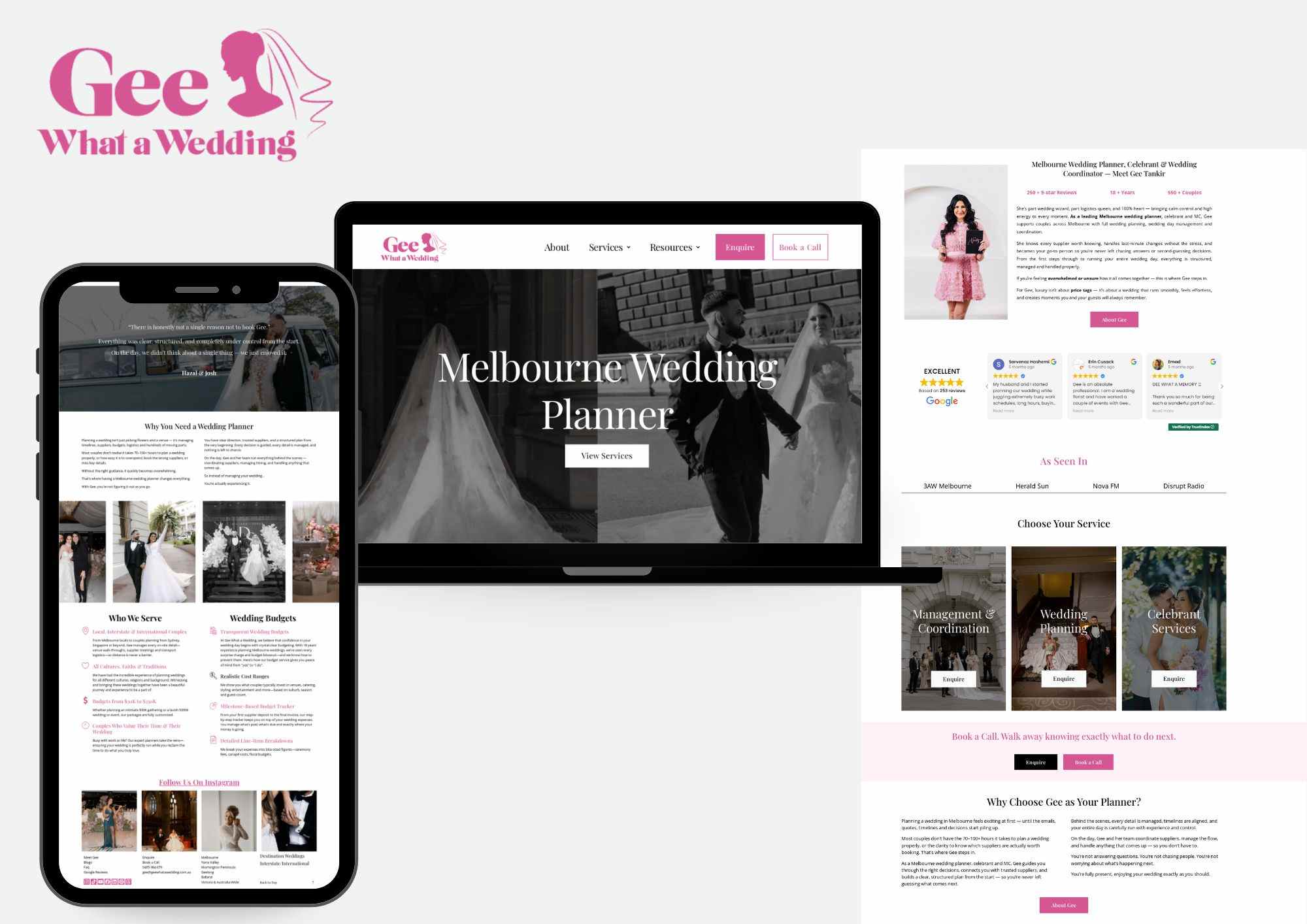
Wedding website showcasing memorable celebrations, planning services, venues, and Melbourne wedding experiences.
Custom Web
Telehealth website providing accessible healthcare services, professional consultations, and convenient support.
Our best advocates are the businesses we support. We collect short, specific testimonials that speak to our process, communication and results.
Yes, but only if the redesign is managed carefully. Rankings are often lost when content is removed, URLs change without redirects, internal links break, or technical SEO settings are mishandled. A planned redesign reduces that risk significantly.
Some movement can happen after any meaningful site change, but a well-managed SEO-safe redesign is designed to protect high-value pages, preserve relevance, and minimise disruption. The goal is stability first, then long-term improvement.
If any URLs change, then yes, redirects are essential. They help users and search engines reach the correct new pages and preserve as much page equity as possible.
You should keep, improve, merge, or expand content based on performance and intent. Removing content without reviewing its search value can damage visibility.
No. Even smaller business websites can lose valuable rankings if a redesign is handled poorly. If your current site brings in search traffic, the redesign should be SEO-aware.
Yes. WordPress and WooCommerce redesigns often benefit from structured migration planning, content review, redirect mapping, and technical launch checks to protect search performance and improve usability.
Offer a short form and a low-friction path.